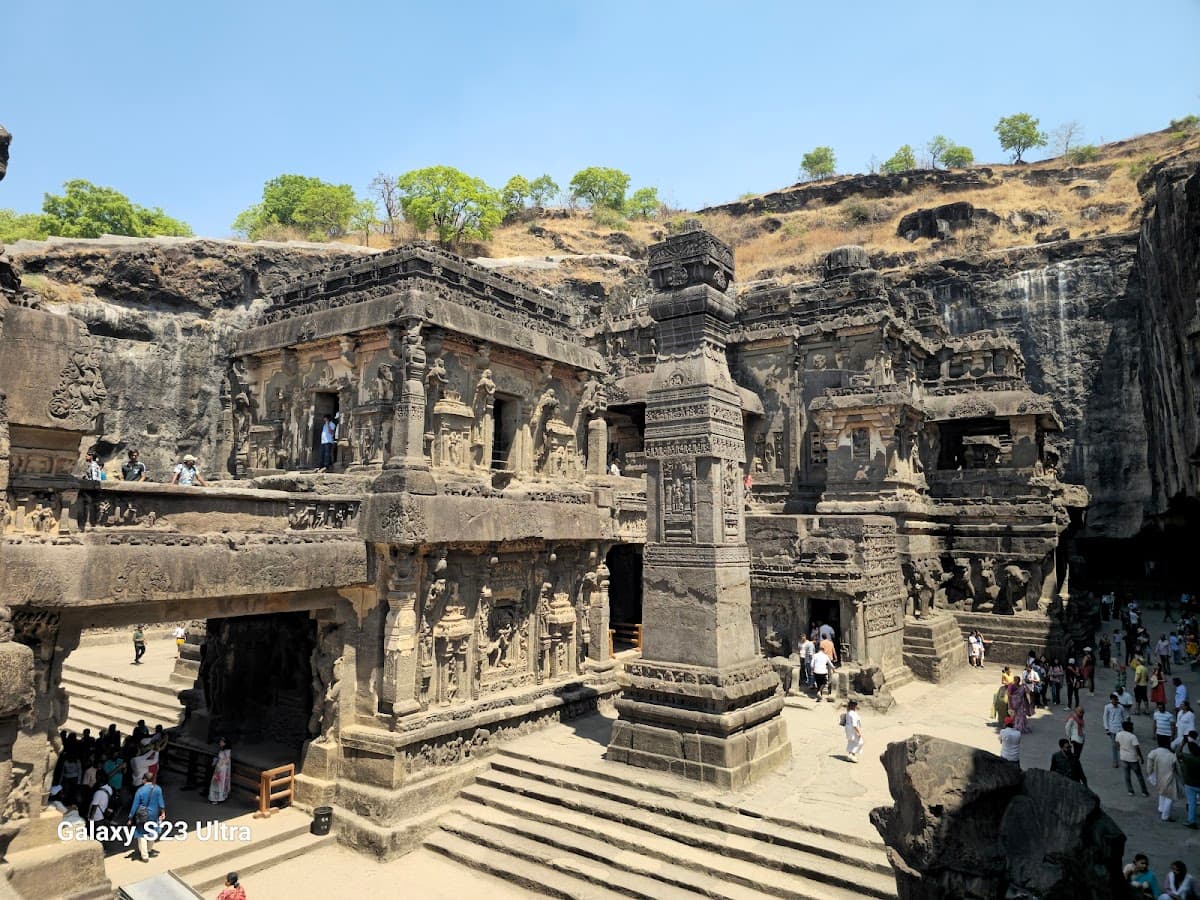
Ellora Caves
Ancient India's masterpiece carved from living rock across centuries
Picture this: 34 temples carved directly into a hillside, each one a testament to the devotion and skill of ancient artisans who spent centuries turning solid rock into sacred spaces. The Ellora Caves aren't just monuments — they're a conversation between three religions, carved in stone across six centuries of Indian history.
Located 30 kilometers from Aurangabad in Maharashtra, these UNESCO World Heritage caves represent something extraordinary: Buddhist, Hindu, and Jain communities working side by side, literally carving their beliefs into the same cliff face. Cave 16, the Kailasa Temple, stands as the world's largest monolithic structure — imagine excavating 200,000 tons of rock to create a temple from the top down.
But here's what guidebooks won't tell you: the caves feel different depending on when you visit. Early morning light filters through the carved windows of Cave 10's prayer hall differently than the harsh afternoon sun. The monsoon months make the carvings glisten, but they also make the site slippery and less accessible.
Money-Saving Tips
- 1.Entry fee is ₹40 for Indians, ₹600 for foreigners. Keep your ticket — it includes access to the site museum.
- 2.Audio guides cost ₹118, but the free ASI app works just as well if you have mobile data.
- 3.Bottled water inside costs ₹30-50. Fill up in Aurangabad or bring your own to save money.
- 4.Licensed guides charge ₹500-800 for groups up to 25 people. Split the cost with other visitors at the entrance.
- 5.Photography is free, but video recording requires a ₹25 fee for Indian citizens, ₹500 for foreigners.
- 6.Parking costs ₹20 for cars, ₹5 for two-wheelers. No overnight parking allowed.
- 7.Combine your visit with Grishneshwar Temple (free entry) to maximize your trip value.
- 8.State transport buses (₹35) are much cheaper than private taxis (₹1,500-2,000) for the Aurangabad-Ellora route.
Travel Tips
- •Visit between 6-9 AM for the best lighting and smallest crowds. Cave 16 looks completely different in morning light.
- •Wear shoes with good grip — the carved floors can be slippery, especially after cleaning.
- •Bring a small flashlight or use your phone's torch for darker corners where details are harder to see.
- •Download offline maps before visiting. Mobile coverage can be spotty inside some caves.
- •Respect the no-touching rule — oils from hands damage the ancient stone carvings.
- •The site has limited shade between caves. Bring a hat and sunscreen, especially October-March.
- •Some caves have steep steps or low entrances. Check accessibility needs before planning your route.
- •Visit Cave 16 last if you're short on time — it's the most impressive and deserves proper attention.
- •The small museum near the entrance provides helpful context. Spend 20 minutes there before exploring the caves.
- •Monsoon season (June-September) makes the carvings glisten but paths become slippery and some areas may be closed.
Frequently Asked Questions
BUILD YOUR
ELLORA CAVES PLAN
Insider picks, smart timing, and a plan ready when you are.
Start Planning