Petra
Ancient rose-red city carved into living rock
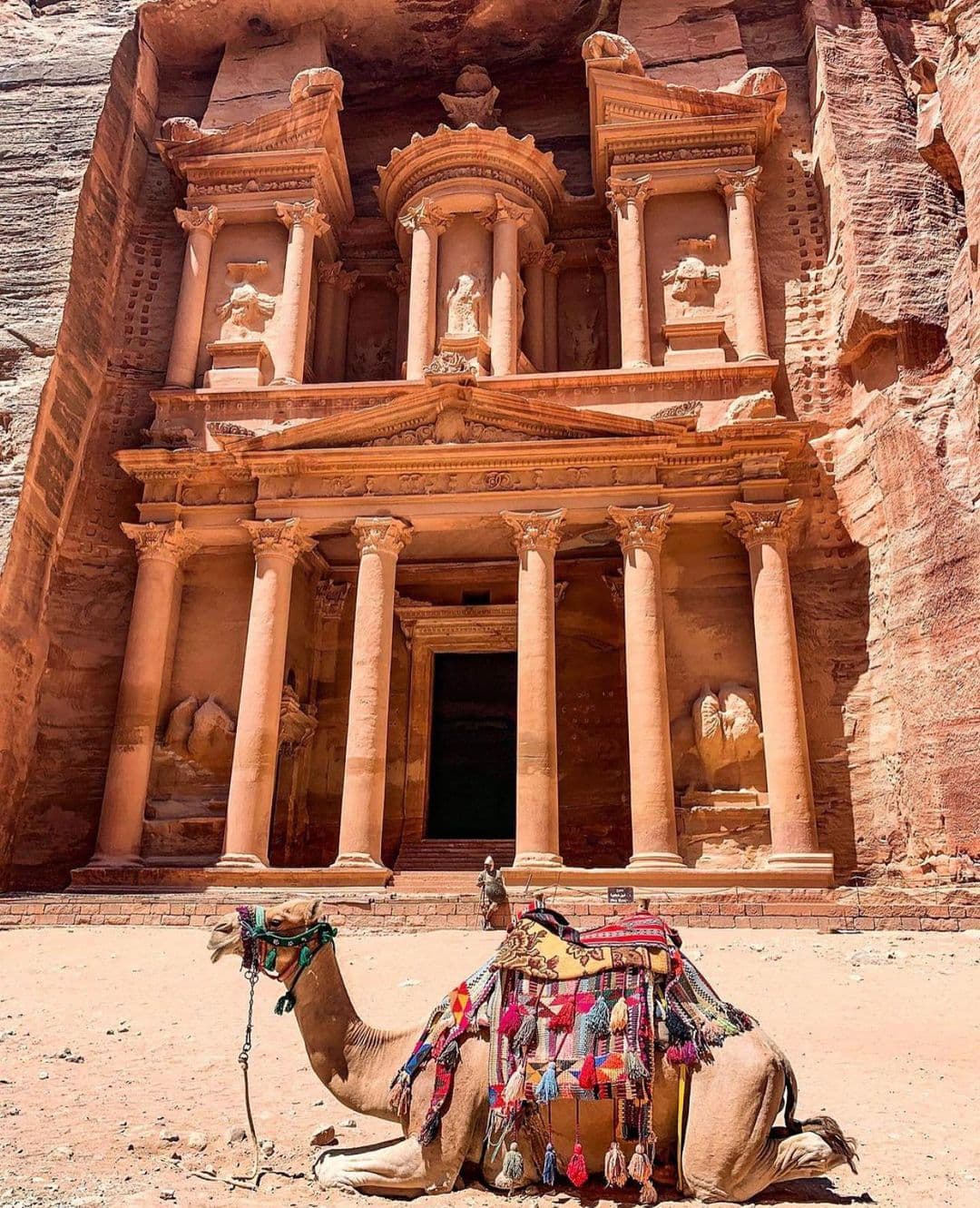
Look, no photo prepares you for Petra. The moment you walk through the Siq and see the Treasury emerge from rose-colored stone, you'll understand why this place stopped Lawrence of Arabia in his tracks. This isn't just another archaeological site — it's a 2,000-year-old city carved directly into sandstone cliffs by the Nabataeans, complete with tombs, temples, and an amphitheater that still echoes with history. But here's what your guidebook won't tell you: Petra is massive. Like, really massive. The main tourist circuit covers maybe 10% of the actual site. You'll need at least two days to see the highlights without feeling rushed, and comfortable shoes are non-negotiable. The rose-red facades change color throughout the day, glowing amber at sunrise and deep crimson at sunset. And yes, it gets crowded — especially around the Treasury — but venture beyond the main path and you'll find tombs and temples where you might be the only visitor for hours.
Best Months
MAR · APR · MAY · SEP · OCT · NOV
~27°C · high crowds
Culture & Context
ROSE-RED RUINS DOMINATE
Petra isn't a town you stay in. It's an archaeological site the size of a small city, 264 square kilometers of rose-red sandstone carved out by the Nabataeans over 2,000 years ago. The nearest actual town is Wadi Musa, and that's where your hotel will be.
Petra hit global fame as one of the New Seven Wonders of the World, and the crowds reflect that. But here's the thing: most visitors see the Treasury, snap their photo, and leave. The site goes so much deeper than that one facade.
The Monastery, the Royal Tombs, the ancient theatre carved directly from rock — most people never bother. The Bedouin community still has deep roots here. Local vendors set up tea stalls in cave tombs and on clifftop overlooks.
It's a functioning economy on top of a UNESCO World Heritage Site, which creates a genuinely unusual atmosphere. Jordan leans conservative. It's a Muslim-majority country, but noticeably more relaxed than some neighbors.
Alcohol is legal, shisha is everywhere, and the Bedouins in particular are pretty unfazed by travelers. Still, dress modestly outside the resort pool. Shoulders and knees covered is the baseline standard.
Local Customs
RIGHT HAND, MODEST DRESS
Dress modestly — shoulders and knees covered for both men and women. In Petra itself you don't need to cover your head, but a scarf is useful against sun and dust.. Always ask permission before photographing people, especially women and children.
A simple gesture toward your camera and a questioning look is enough to communicate.. If someone offers you tea or coffee, accept it. Declining is considered rude.
And if you've had enough coffee, gently shake your cup side to side — that signals you're done.. Eat and handle food with your right hand. Same goes for passing or receiving items..
Public displays of affection — even between couples — are frowned upon. Keep it private.. Alcohol is legal but taxed heavily.
Prices at bars and restaurants are significantly higher than you'd expect. Most Wadi Rum camps don't serve it, though you can usually bring your own.. Tipping isn't mandatory but is appreciated.
Around 10% in restaurants where service isn't included. Guide tips run 5–10 JOD per day depending on the quality of service.. Don't climb on the monuments or touch the rock facades.
It's disrespectful and causes real damage to 2,000-year-old carved stone.. The Bedouin vendors at overlooks and cave stalls will offer tea and try to sell you trinkets. It's not aggressive, just persistent.
A firm but friendly 'la shukran' (no thank you) works fine.. Be aware that 'inshallah' sometimes means yes, sometimes means maybe, and sometimes politely means no. Context is everything.
Safety
CHECK ADVISORIES FIRST
Jordan is generally safe for tourists and Petra runs normally, with tourism police present and guided tours operating daily. That said, check your government's travel advisory before you go. As of early 2026, the US State Department issued a Level 2 advisory (Exercise Increased Caution) for Jordan, citing regional tensions connected to broader Middle East instability.
Non-emergency US government employees were ordered to leave in March 2026 due to drone and missile threats related to US-Iran hostilities. Most tourists are not affected day-to-day — hotels, tours, and the site itself remain fully operational. But this is not a moment to be casual about checking updates before you travel.
Petty crime like pickpocketing is rare but can happen in crowded areas. Keep valuables out of sight. Inside Petra, the main safety concern is terrain — wear actual walking shoes, stay on marked trails, and don't attempt the high viewpoint climbs if the ground is wet or the route looks unstable.
Flash flooding is a real risk in the canyons during rain; if weather turns, get to higher ground immediately. Stay hydrated. The site covers massive distances in open desert sun, and heat exhaustion is a genuine risk in summer.
Avoid border areas near Syria and Iraq. Emergency numbers: Police 911, Tourist Police 199.
Getting Around
DESERT HIGHWAY REQUIRED
Getting to Petra means getting to Wadi Musa first. From Amman (Queen Alia Airport), it's about 230 km — roughly 3 hours by car via the Desert Highway (Route 15). The JETT bus runs from Amman's Abdali station and costs around $30–40 USD.
Prefer driving? The King's Highway (Route 35) takes longer and winds through ancient towns and canyon overlooks — take it if time isn't the priority. From Aqaba in the south, it's only 1.
5 hours by car. Inside Wadi Musa, taxis are the main way to get around. Negotiate fares in advance.
To Wadi Rum by minibus from Wadi Musa hotels: 10 JOD per person, departing around 6:30 AM. Petra's Visitor Center is the only entrance to the site, at the bottom of Wadi Musa. The park is open 6 AM to 6 PM in summer, 6 AM to 4 PM in winter.
Walk in early. A horse-drawn carriage runs from the Visitor Center toward the Siq — 15 JOD one-way, 25 JOD return, and the horses are often pressured into carrying too many people too fast. Walking is better.
WiFi does not exist inside the site. Buy a local SIM card (Zain or Orange) at Queen Alia Airport for 15–18 JOD for 20GB — it'll cover you in Wadi Musa but won't help once you're past the gate. Download offline maps before you enter.
Useful Phrases
Itineraries coming soon
We're working on adding amazing itineraries for Petra. In the meantime, try the app to create your own!
Money-Saving Tips
- 1.Buy the Jordan Pass online before arriving — it includes Petra entry and saves money on visa fees if staying 3+ nights
- 2.Pack your own lunch and water bottles to avoid expensive food inside Petra (25 JOD buffet vs 5 JOD packed meal)
- 3.Stay in Wadi Musa town center instead of resort hotels near the entrance to save 100+ JOD per night
- 4.Take the JETT bus from Amman (10 JOD) instead of private transfers (60+ JOD)
- 5.Buy the 2-day or 3-day Petra pass if staying longer — much better value than daily tickets
- 6.Shop for souvenirs in Wadi Musa markets rather than inside Petra where prices are inflated
- 7.Bring a headlamp instead of buying overpriced flashlights for early morning visits
Travel Tips
- •Wear sturdy hiking shoes with good grip — the ancient stone paths can be slippery
- •Start at sunrise to avoid crowds and catch the Treasury in perfect morning light
- •Bring more water than you think you need — the dry climate is dehydrating
- •Download offline maps of Petra before visiting as cell service is spotty inside the site
- •Don't just stick to the main tourist trail — some of the best tombs are off the beaten path
- •Respect local customs by dressing modestly, especially when visiting nearby villages
- •Learn a few Arabic phrases — locals appreciate the effort and it enhances interactions
- •Book accommodations well in advance during peak season (March-May, September-November)
- •Carry cash in Jordanian dinars — many small vendors don't accept cards
- •Take breaks in shade during midday heat and plan strenuous hikes for early morning or late afternoon