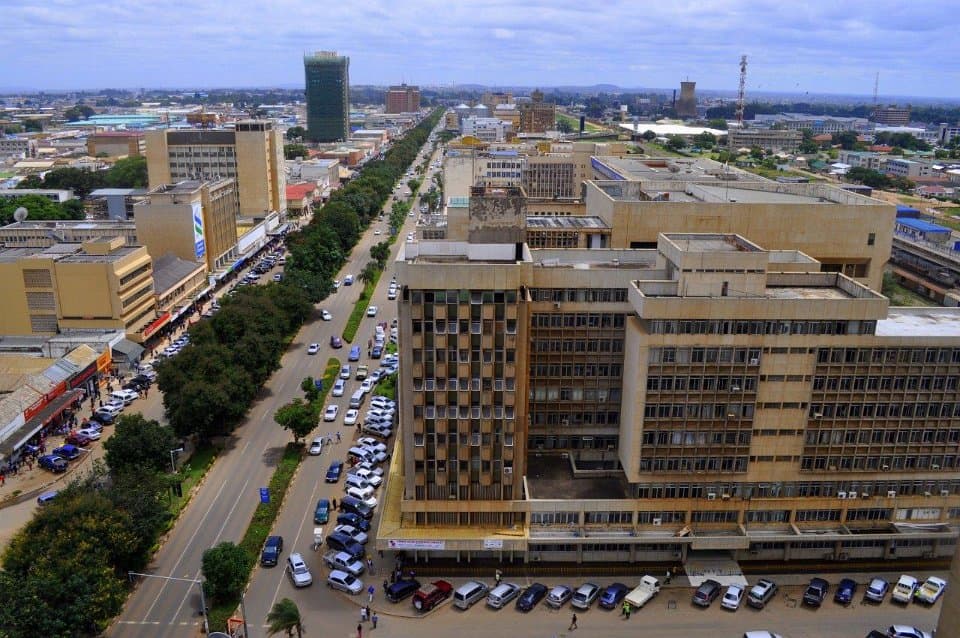
Lusaka
Zambia's vibrant capital blends modern Africa with tradition
Lusaka doesn't try to impress you with flashy attractions or Instagram-perfect backdrops. Instead, Zambia's capital wins you over slowly, like a good friend who grows on you. This is modern Africa at its most authentic – where gleaming shopping malls sit alongside traditional markets, and the pace of life lets you actually breathe. The city sprawls across rolling hills, punctuated by jacaranda trees that turn the streets purple in October. You'll find excellent local cuisine, friendly locals eager to chat, and prices that won't drain your travel fund. But here's the thing: Lusaka rewards the curious traveler who digs beneath the surface.
Best Months
MAY – SEP
~28°C · moderate crowds
Culture & Context
GREET FIRST, ALWAYS
Lusaka is home to more than 70 ethnic groups — Bemba, Tonga, Lozi, Nyanja, Chewa, Ngoni — all coexisting in what was originally built as a colonial railway depot in 1905. The city grew fast and is showing it. Wide streets left over from the British colonial era now share space with sprawling markets, new shopping malls, and residential compounds that vary wildly in character from one block to the next.
Greetings are serious business here. Jumping straight to your request without saying hello first is considered flat-out rude — a vendor at Soweto Market will give you noticeably cooler service if you skip the pleasantries. Always lead with a greeting, offer a firm but warm handshake (often repeated when parting), and ask how someone is doing before getting to the point.
Eating with your hands is traditional, particularly when having nshima (white maize porridge), the cornerstone of Zambian cooking — scoop it with your right hand and dip it in stew or vegetables. If someone offers you food, accept it, even if you're not hungry. Refusing reads as disrespect.
Tipping around 10% in restaurants is appreciated; small change for hotel porters. Photography requires asking first, especially at markets, near elders, and at religious sites. Zambia is a conservative country.
In Lusaka specifically, casual dress is fine for tourists in urban areas, but cover shoulders and knees when visiting villages or religious sites. Same-sex relationships are illegal under Zambian law — LGBTQ+ travelers should be aware that penalties can be severe.
Local Customs
RESPECT IN HANDSHAKES
Greet before anything else — skipping a greeting is considered disrespectful and will cool an interaction immediately. Lead with 'Muli bwanji?' or simply 'How are you?
' before making any request.. Handshakes are expected on arrival and departure, often repeated. In more traditional settings, place your left hand on your right forearm while shaking — it signals respect..
When receiving a gift or being offered something, show genuine gratitude with a handshake and a warm thank you. Accept food if offered, even a small amount.. Bargaining is normal and expected at markets like Kamwala and Soweto Market — but do it politely and with good humor.
Start lower than you want to pay and work toward a fair middle.. Always ask before photographing people, especially elders or anyone in traditional dress. In some sacred spaces, photography is simply not allowed..
Plastic bags are banned in Zambia — don't pack them in your luggage. Remove anything in plastic bags at the airport before you disembark.. Tap water is not safe to drink.
Stick to sealed bottled water and skip ice in drinks unless you're certain of the source.. Malaria is present. Take antimalarial medication before and during your trip, use a DEET-based repellent (at least 50%), and sleep under a net if your accommodation doesn't have A/C..
Carrying prescribed medications? Keep them in original bottles with a prescription. Possession of even small quantities of illegal substances can be charged as drug trafficking under Zambian law..
Don't buy wildlife products — tortoise shells, ivory, rhino horn. Buying illegal wildlife items can result in a minimum five-year prison sentence.
Safety
WATCH YOUR BELONGINGS
Zambia holds a Level 1 (exercise standard precautions) rating from the US State Department — one of the lowest risk ratings in Africa. That said, Lusaka specifically has a higher crime rate than rural Zambia, and it demands sensible habits. Petty theft is the main concern: pickpockets operate in crowded markets, bus stations, and public transport.
Bag snatching and smash-and-grab from vehicles stuck in slow traffic also happen. Don't walk alone downtown, in poorly lit areas, in public parks, or in high-density residential compounds at night. Victims have occasionally been followed from ATMs and banks — avoid ATMs after dark, full stop.
Keep car doors locked and windows up when driving through the city. For getting around, use Uber, Bolt, or the local Ulendo Taxi app (which also has female drivers, useful for solo women travelers) rather than random minibuses at night. The minibuses — called 'mutotos' locally — are affordable and widely used by locals but are often overcrowded and poorly maintained.
Solo female travelers face additional harassment risks and should avoid sharing taxis with strangers. Nightlife areas need extra caution: the use of date-rape drugs at bars and clubs in Lusaka has been reported, so never leave drinks unattended. Health: malaria is real and requires medication plus repellent.
Yellow fever vaccination certificate may be required if traveling from high-risk countries. Drink only bottled or purified water — tap water is not safe. Note that in early 2025, contaminated mining wastewater entered the Kafue River system; boiling water does not remove heavy metals, so stick to sealed bottles and avoid fish from potentially affected waterways.
Getting Around
UBER BEATS MUTOTOS
Kenneth Kaunda International Airport (LUN) is 20 km from the city center. Taxis meet arrivals but agree on a price before you get in — or better, book through Uber or Bolt from the arrivals hall. Minibuses (mutotos) are the primary intra-city transport for locals.
Cheap, frequent, and genuinely chaotic — they're overcrowded, rarely punctual, and the driving is aggressive. Great for a short experiment in local life; not great for getting somewhere reliably on time. Uber and Bolt both operate in Lusaka and are significantly more reliable.
The local Ulendo Taxi app is also worth downloading. For day trips outside the city — Kafue National Park, Chaminuka, or Livingstone (a few hours south) — hire a private driver or rent a car. Road quality on main arteries is reasonable; secondary roads deteriorate fast in rainy season (November–April).
Speed limit in the city is 50 km/h. If stopped by police for a fine, ask for an official receipt or request to pay at the nearest police station. There's no urban rail.
Long-distance buses to Livingstone and the Copperbelt are the most comfortable public option between cities. The TAZARA train runs Lusaka to Kapiri Mposhi (ZMW 50–100, roughly 4–6 hours) for those with time and curiosity.
Useful Phrases
Money-Saving Tips
- 1.Bargain at markets – starting prices are often double what locals pay
- 2.Eat at local restaurants instead of hotel dining rooms to cut food costs by 70%
- 3.Use minibuses for transport – they cost 5 kwacha versus 50+ for taxis
- 4.Buy Mosi beer at bottle stores rather than bars to save 10 kwacha per drink
- 5.Shop at Shoprite or Pick n Pay for groceries instead of hotel convenience stores
- 6.Book accommodation in Woodlands or Roma Park instead of tourist areas
- 7.Withdraw cash at banks rather than hotel ATMs to avoid extra fees
- 8.Join locals at weekend braais instead of expensive restaurant dinners
Travel Tips
- •Learn basic Nyanja phrases – locals appreciate the effort and open up more
- •Carry small bills – many vendors can't make change for large notes
- •Pack insect repellent year-round, especially during rainy season
- •Bring a universal adapter – power outlets vary even within the same building
- •Download offline maps – mobile data can be spotty in some areas
- •Respect photography rules – ask before taking photos of people or government buildings
- •Carry toilet paper – public facilities rarely provide it
- •Book accommodations in advance during dry season when tourism peaks
- •Keep copies of important documents – bureaucracy moves slowly if you lose originals
- •Pack layers – temperatures can swing 15°C between day and night