Livingstone
Victoria Falls gateway for adrenaline junkies and safari enthusiasts
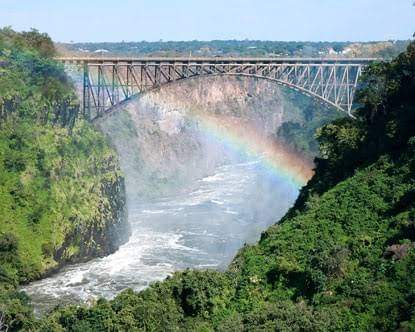
Livingstone isn't just another African tourist town. It's where adrenaline junkies come to bungee jump off the Victoria Falls Bridge and safari enthusiasts track elephants along the Zambezi River. Named after the famous explorer, this compact city serves as your launchpad to one of the world's most spectacular waterfalls. But here's what the guidebooks won't tell you: the real magic happens beyond the falls. White-water rafting through Grade V rapids. Walking with lions at Mosi-oa-Tunya National Park. Sunset cruises where hippos surface just meters from your boat. The town itself keeps things refreshingly low-key - dusty streets lined with craft markets, local bars serving Mosi beer, and lodge owners who still remember when tourism was just getting started here.
Best Months
APR – OCT
~28°C · moderate crowds
Culture & Context
COLONIAL GRANDEUR, LOCAL SOUL
Livingstone sits in Zambia's southwest corner, a 10-minute drive from Zimbabwe and the thunder of Victoria Falls. It was the colonial capital of Northern Rhodesia from 1911 to 1935, and the bones of that era are still visible along the main drag: wide avenues, Edwardian-era buildings, and a certain faded grandeur that hasn't been smoothed over by tourist infrastructure. The town was named after Dr. David Livingstone, the Scottish explorer-missionary who was the first European to clap eyes on the falls in 1855. He called them the most beautiful sight he'd seen in Africa. He wasn't wrong.
Here's the thing about Livingstone versus the Zimbabwe side (Victoria Falls town): Zambia's entry is cheaper, the town is friendlier, and the hustling is lower-key. The Zambian falls viewpoint shows a different face of the cascade, and activities like the Devil's Pool swim and Livingstone Island lunch feel genuinely exclusive. The Mosi-oa-Tunya National Park, right on the edge of town, holds the only white rhinos in Zambia. That alone is worth the detour.
Locally, the population is predominantly Tonga (Leya people), though the city draws Bemba, Nyanja, and Lozi speakers from across the country. English is universal among adults. Music is huge: you'll hear Congolese rumba blasting from minibuses, and the local nightlife is a mix of tourists and Zambians dancing together. The Mosi lager is ice-cold and costs around 15,000 ZMW. Drink it. It's the local handshake.
Local Customs
GREET FIRST, ALWAYS
Greet before you ask anything. Walking up to a vendor or official and launching straight into a question is considered rude. A quick 'Mulibuti' (hello) or 'Mwapona' (how are you?
) sets the right tone.. Dress modestly outside the resort bubble. Livingstone is a conservative country.
Shorts and sleeveless tops are fine near the falls and lodges, but cover up when walking through town markets.. LGBTQ+ travelers should know that homosexuality is illegal in Zambia. Public displays of affection between same-sex couples carry real legal risk.
The local community is welcoming to tourists on a general level, but discretion matters here.. USD is widely accepted in tourist areas, but paying in Zambian Kwacha (ZMW) at local markets usually gets you a better deal. Keep small denominations.
Nobody has change.. Malaria is endemic. Take prophylaxis (Malarone or Doxycycline) starting before you arrive.
Use DEET repellent, especially at dusk. This is not optional advice.. A Yellow Fever vaccination certificate is required if you're arriving from any country on the WHO's endemic zones list (34 African countries).
Border officials do check.. Always ask for an official Government of Zambia receipt when someone asks you to pay a fee, at any checkpoint or crossing. Scammers rely on people being too polite to push back.
Asking for a receipt usually ends the conversation fast.. Don't walk the 8km road from Livingstone town to Victoria Falls. It's not just a crime risk — during certain months, bull elephants in musth roam that corridor and they're not shy about confronting humans.
Safety
WATCH YOUR WITS
Livingstone is one of the safer tourist destinations in Southern Africa. Violent crime against tourists is rare. The US, UK, Canadian, and Australian governments all maintain their lowest-level travel advisories for Zambia as of March 2026. That said, petty crime is real and some specific scams target tourists directly.
Common issues: pickpockets in crowded markets near transport hubs; ATM card skimming (cover the keypad, refuse 'help' from strangers); the camera-drop scam (someone hands you their camera, then drops it and demands payment); shell-game pickpocket teams near tourist areas; and the bar-tab scam where seemingly friendly locals invite you for drinks and you end up paying 5–10x inflated prices.
At any border crossing or checkpoint, if someone asks for a fee, insist on an official Government of Zambia receipt. Scammers usually walk away once you ask for paperwork.
Don't walk in town after dark. Street lighting is minimal in many areas. Use registered taxis instead. Keep car doors locked and windows up in traffic. Don't flash cash or expensive equipment in markets.
Malaria is endemic. Take prophylaxis, use DEET repellent after dark, and sleep under a net if your accommodation doesn't have air conditioning. Water safety matters too: stick to bottled or filtered water. In 2026, a 1.5L bottle runs about 15–22 ZMW ($0.60–$0.90). The Kafue River system upstream had contamination issues from mining wastewater in 2025 — not directly relevant to Livingstone's water supply, but worth knowing if you're moving around the country.
Getting Around
WALKABLE CENTER, TAXI OUT
Livingstone's Harry Mwanga Nkumbula International Airport (LVI) receives daily flights from Lusaka (45 minutes), plus direct international connections from Johannesburg with FlySafair, Airlink, and CemAir, and Nairobi and Cape Town via Kenya Airways three times a week. From Lusaka by road, it's 470km south on the Kafue Road — about 7 to 8 hours by bus or car.
In town, the centre is compact enough to walk during daylight hours. But don't attempt the 8km stretch from town to the falls gate on foot. Take a taxi. Cross-town rides run 150–250 ZMW ($6–10). Always agree on the fare before you get in. There's no reliable meter system, and drivers will sometimes quote tourist prices that are two or three times the going rate.
Public minibuses (locally called 'public transports') are cheap and run along the main routes, though they can be confusing if you don't know the route numbers. Useful once you've been around for a few days.
For crossing into Zimbabwe, the Victoria Falls Bridge is 11km from Livingstone town. Blue taxis wait at the border for the return trip into town. The KAZA UniVisa ($50) covers unlimited movement between Zambia and Zimbabwe for 30 days and includes day trips to Botswana via the Kazungula border. It's available on arrival at LVI airport and at the Victoria Falls border crossing. Much better value than buying separate visas if you're doing both sides.
Useful Phrases
Money-Saving Tips
- 1.Book activities directly through operators rather than hotel concierges to avoid 20-30% markup fees
- 2.Bring US dollars in good condition - torn or old bills get rejected and exchange rates for kwacha are poor
- 3.Combo packages for Victoria Falls, helicopter rides, and rafting cost $300-400 but save money versus booking separately
- 4.Eat at local markets and village restaurants - nshima meals cost $3-5 versus $25+ at tourist spots
- 5.Stay in town center accommodation and take taxis to falls instead of paying premium lodge rates
- 6.Visit during shoulder season (April-May, October) for 40% lower accommodation costs
- 7.Negotiate taxi fares upfront - standard rate from town to falls should be 80-100 kwacha
- 8.Buy bottled water in bulk from Pick n Pay supermarket rather than paying lodge minibar prices
Travel Tips
- •Pack quick-dry clothing - you'll get soaked at Victoria Falls viewing points regardless of season
- •Bring malaria prophylaxis and insect repellent - the Zambezi River area has year-round mosquitoes
- •Book helicopter flights early morning for clearest visibility and best photography conditions
- •Carry passport everywhere - you'll need it for Zambia-Zimbabwe border crossings and some activities
- •Download offline maps - cell service is spotty outside town center and lodge areas
- •Respect local customs in villages - ask permission before photographing people and dress conservatively
- •Keep cameras in waterproof bags during boat trips - Zambezi spray and sudden rain showers are common
- •Book white-water rafting for morning slots when water is calmest and guides are freshest