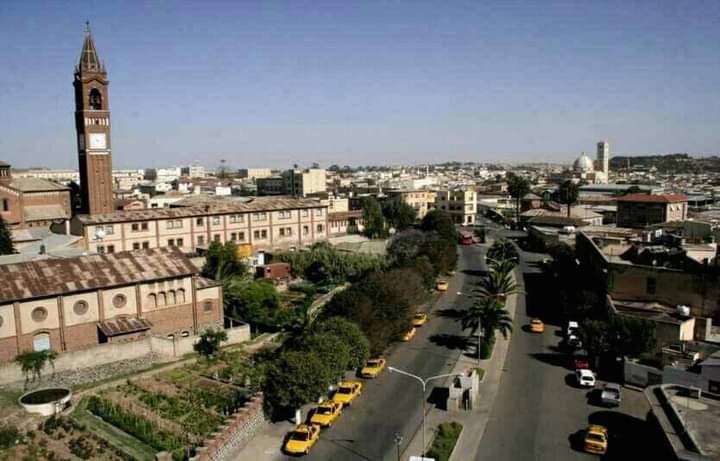
Asmara
Art Deco Jewel of the Horn
Asmara feels like stepping into a 1930s time capsule. This highland capital sits at 7,600 feet above sea level, where Italian Art Deco buildings line wide boulevards and locals sip macchiatos at sidewalk cafés. The city earned UNESCO World Heritage status in 2017 for having Africa's best-preserved modernist architecture. But here's what the guidebooks don't tell you: Asmara moves at its own pace, visas are notoriously difficult to obtain, and the coffee here puts Italian espresso to shame. The dry mountain air keeps temperatures pleasant year-round, while the city's isolation has preserved both its architectural gems and traditional way of life.
Best Months
JAN · FEB · MAR · SEP · OCT · NOV · DEC
~27°C · moderate crowds
Culture & Context
ART DECO TIME CAPSULE
Asmara sits at 2,325 meters, which makes it the sixth-highest capital in the world. The altitude catches people off guard. The city spent decades under Italian colonial rule, and that era left behind an extraordinary collection of Art Deco, Futurist, and Modernist buildings.
UNESCO recognized the whole city as a World Heritage Site in 2017. More than 400 buildings of Italian origin remain standing. Eritrea only gained independence from Ethiopia in 1993 after a 30-year war, and that struggle is central to how people here understand themselves.
The country has nine distinct ethnic groups. Religion runs deep: roughly 60% Christian Orthodox and 40% Muslim, often split along regional and ethnic lines. The northern areas near Sudan skew Muslim; the highlands near the Ethiopian border skew Christian Orthodox.
Churches are packed. The coffee ceremony is serious social business, not a tourist show. Italians left behind a genuine espresso culture, and Asmara genuinely serves some of the best cappuccino you'll find in Africa, in 1930s cafes that have barely changed.
Local Customs
CASH ONLY, ALWAYS
Cash is the only option, everywhere, always. Don't arrive assuming your card will work anywhere.. Photography near military installations, government buildings, and border zones is illegal.
It's not a suggestion. Violations mean confiscated camera and potentially your visa.. Dress modestly.
This applies in both Muslim and Christian areas. Shorts and sleeveless tops draw unwanted attention and show disrespect at religious sites.. At mosque visits, take off shoes and cover your head.
Modest clothing is not optional.. The coffee ceremony (bun) is a deeply social ritual, often three rounds: awel (first), kal'ay (second), bereka (third). Refusing all three rounds after being invited is considered rude.
Accept at least the first.. Eritreans above 60 often speak Italian. Don't be surprised.
It's a genuine legacy, not an affectation.. Sunday Orthodox church services start at around 6am at Enda Mariam Cathedral. The singing is extraordinary.
Stand back and don't flash a camera.. Handshakes are standard greetings. Close friends often embrace.
Let the local person set the tone for physical greeting.. Altitude hits hard on day one. Take it slow, stay hydrated, skip heavy exertion the first 24 hours..
ATMs exist but run empty by Thursday. Change money with hotel receptionists for a better rate than official banks.
Safety
SAFE CITY, TENSE BORDERS
Asmara is genuinely one of the safer capital cities in Africa. Crime rates are low, street harassment is minimal (solo female travelers consistently report this), and scams are rare. That said, the UK Foreign Office currently advises against all travel to Eritrea, and the US State Department flags increased caution.
These advisories relate primarily to the political situation and proximity to ongoing regional tensions, not street-level safety. Avoid all border areas within 25km of Ethiopia or Djibouti. Those zones remain sensitive and permits don't cover you there.
Photography near any military installation or government building is illegal, full stop. The altitude (2,325m) is a real issue on day one. Mild altitude sickness is common.
Headaches, fatigue, shortness of breath. Take it easy, drink water, skip heavy exercise the first day. Comprehensive travel insurance with medical evacuation coverage is mandatory, as healthcare outside Asmara is extremely limited.
Land borders are not open to foreign travelers. Fly in and fly out.
Getting Around
MINIVANS & STEAM TRAINS
Getting there is the first puzzle. Ethiopian Airlines suspended all flights into Asmara indefinitely as of October 2024, which significantly cuts options. Check current routes carefully before booking.
Once in the city, getting around is cheap and fairly simple. Flag down any blue-and-white minivan on Harnet Avenue, shout your stop, and pay 5 nakfa (about $0.30) to get across town.
Shared taxis leave from the garage behind the main mosque when full, running 300 nakfa ($20) for longer city routes. For the Sunday treat: a 1910 Italian steam train climbs through eucalyptus groves and stone villages to Nefasit, 200 nakfa ($13) for wooden bench seats. It's a 1910 engine on a real climb.
Bring water; there's no buffet car. For anything outside Asmara (Massawa, Keren), you need a travel permit from the Ministry of Tourism, around $10 USD each, taking 24 hours to process. The drive from Asmara down to Massawa on the rebuilt Italian highway takes about three hours and is one of the most dramatic descents in East Africa.
Private car hire is the practical choice for destinations outside the capital.
Useful Phrases
Money-Saving Tips
- 1.Bring US dollars in pristine condition — torn or old bills get rejected at banks
- 2.The official exchange rate differs dramatically from black market rates, but stick to banks to avoid legal trouble
- 3.Credit cards don't work anywhere — this is a cash-only destination
- 4.Nakfa notes come in small denominations, so you'll carry thick wads of money
- 5.Tipping isn't expected but small amounts (10-20 nakfa) are appreciated at restaurants
- 6.Hotel prices are often quoted in dollars but paid in nakfa at official rates
Travel Tips
- •Visa applications can take 2-6 months — start the process early through Eritrean embassies
- •Photography permits are required for many buildings — ask your hotel to arrange them
- •Internet is extremely slow and expensive — download offline maps and entertainment before arriving
- •Bring any medications you need — pharmacies have limited stock
- •The altitude can cause headaches initially — drink lots of water and avoid alcohol the first day
- •Learn basic Tigrinya phrases — English isn't widely spoken outside hotels
- •Dress conservatively — long pants and covered shoulders are expected
- •Don't photograph government buildings, military installations, or bridges without permits